The firm's daily work in the same application
Files, deadlines and drafts are only half of a firm. PatentFlow also plans the work up to the deadline, records the time spent, writes the invoices, checks for conflicts and manages who may see and do what.
Tasks, work packages and sprints
An application has a fixed date like a software release: the filing day. Work packages group the tasks towards that milestone - a deadline in the docket -, and each task has a type, an assignee and a due date. Without its own date a task is due with its package, a package at its deadline's pre-deadline; whatever is planned after the official deadline is flagged.
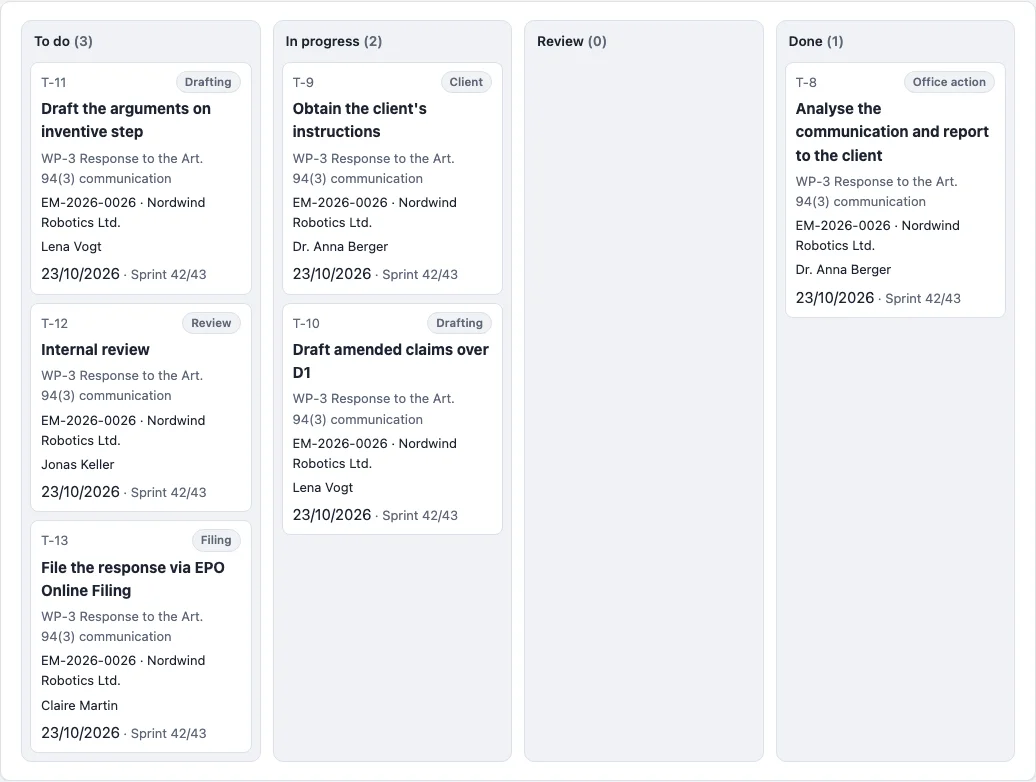
Templates for recurring procedures - such as a DPMA first filing, an EP filing claiming priority, a response to an office action or PCT national phase entry - create a package with all its tasks and count the dates back from the deadline. The board shows who is working on what; cards move on by drag and drop.
Sprints are optional: if the firm works in sprints of any length, packages and tasks in a sprint are due at its end, and whatever is unfinished moves to the next sprint or back to the backlog when it closes. Distributing work needs the "planning" right; everyone else creates tasks for themselves and works on their own.
Time per file
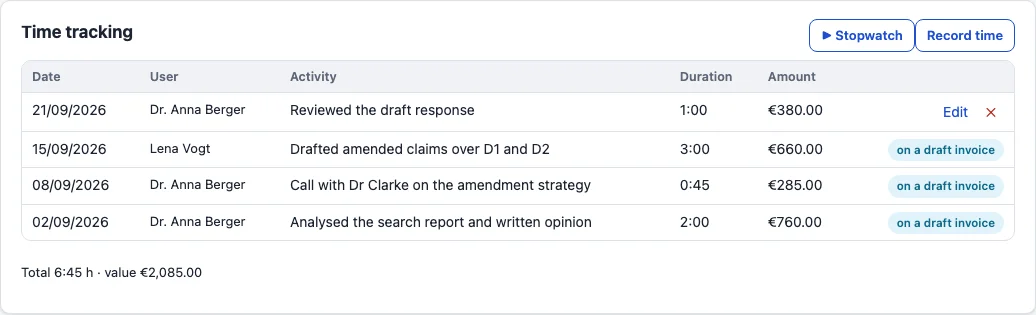
Everybody records their own time on the files they work on, typed in or with a stopwatch. The hourly rate is fixed when the time is recorded - the client's own rate, the person's or the firm's default - so a later rate change does not reprice past work.
Invoices with official fees
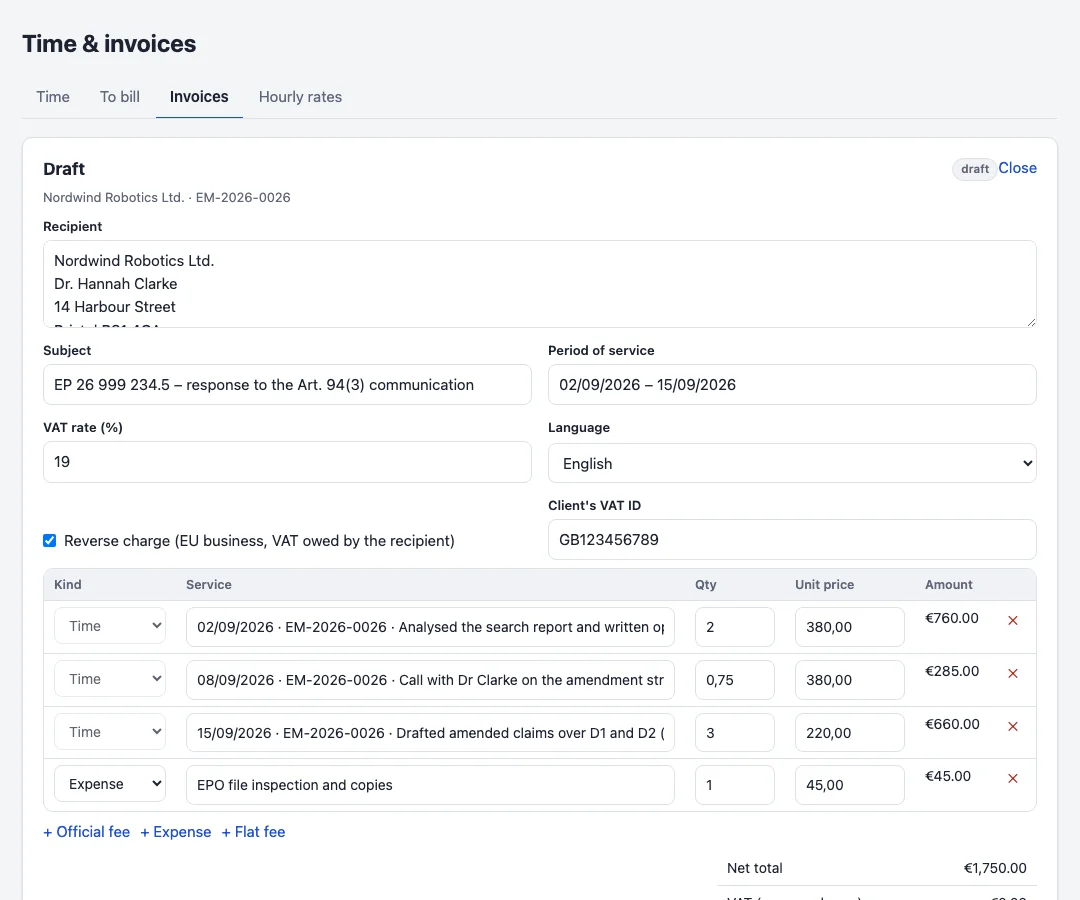
An invoice collects the open time of a client and adds official fees without VAT, expenses and flat fees. Issuing it gives the next number without gaps and writes a Word invoice with the details German VAT law requires; after that it is never edited - a cancellation invoice corrects it. Reverse charge is proposed for clients with a foreign VAT id.
Conflict check
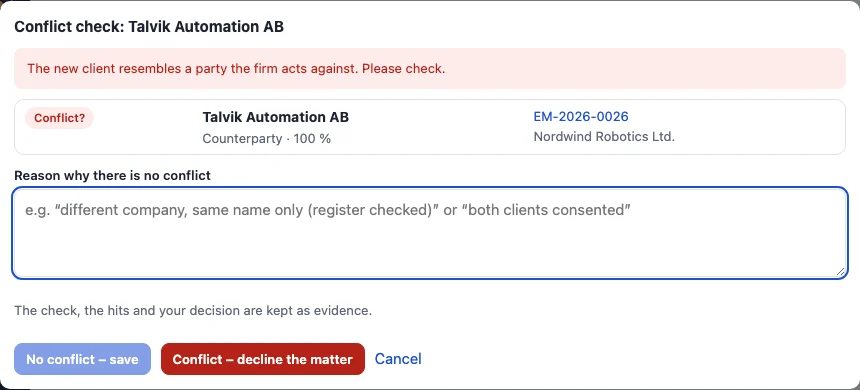
Every new client and every counterparty is compared with everybody the firm represents and acts against, across all files and ignoring legal forms and spelling variants. A hit on the other side needs a reason before the save goes through, and every check is kept as evidence.
Users, groups and visibility
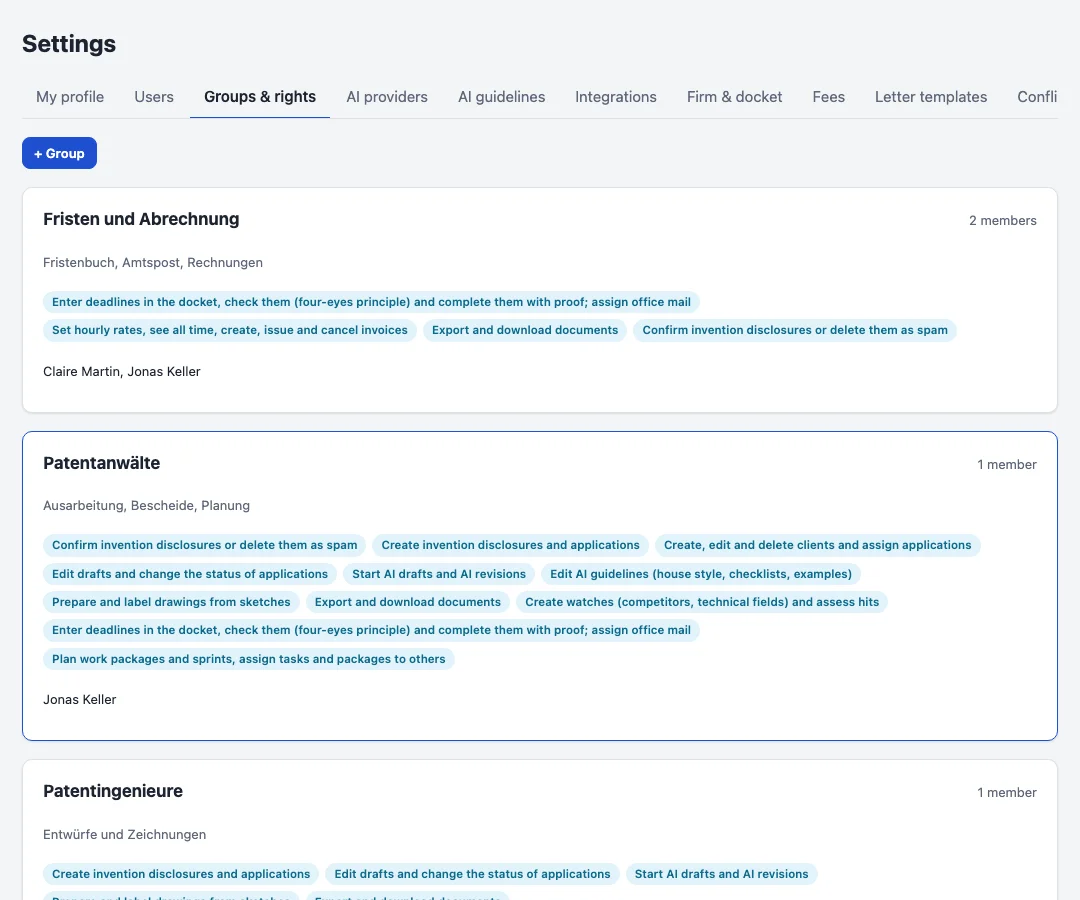
Rights are given to groups - confirming disclosures, editing drafts, running the AI, keeping the docket, billing and more. Clients and files are visible to everybody, to certain groups or only to their owner, and hidden records do not even show up in searches.